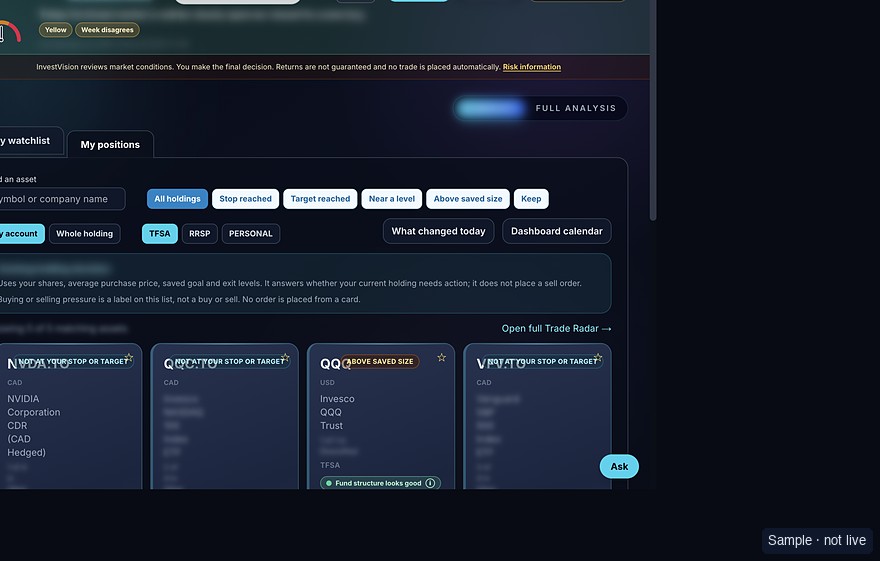



If you hold shares and write a plan
If you already hold a stock and have a stop or a target in mind, writing it down helps you remember the plan later. Nothing on this page places a sell order.
Stop and target in plain words
A stop is a level where you would usually say “this idea is no longer working for me — I should review.” A target is a level you are watching for taking profit or lightening the position.
Both numbers belong to your own plan. They are not a price forecast and not a buy or sell tip from the site.
Why writing beats keeping it only in your head
- When markets move fast, a written number helps emotion replace the plan less often.
- With several holdings, it is hard to remember what you meant for each name without notes.
- Later you can see whether price reached your stop or target — for learning, not for grading yourself.
A plan note is not a brokerage order
Writing a stop on a practice page is not the same as a stop-loss order at your broker. A sale happens only if you place an order yourself.
Some people also mirror that number as a real broker order. Others keep only a note. Both are personal choices. This guide does not create orders.
Short habits that help
- First write why you hold the name; then write the stop and target.
- Use the same currency as that listing (CAD or USD).
- If the idea changes, update the note — do not pretend the old plan is still live.
- An account label such as TFSA is for organization; it does not replace risk judgment.
Where this shows in InvestVision
On holdings you keep, you can save a stop or target as a plan note. You can also turn on a message when that level is reached — a message, not a sell.
Ready and Wait are entry-checklist labels for a new idea. They do not replace a holding stop.